
> ./blog / own-corner-of-the-internet
Make Your Own Corner of the Internet

I’ve always felt that having your own corner of the internet is at the heart of what makes the internet worth using. Somewhere that is uniquely yours. Your writing, your design, your slightly odd interests, presented however you want.
A social media profile isn’t quite that. You can choose a picture and write a bio, but you’re still fitting yourself into somebody else’s idea of what a page should be.
I’d rather have a site of my own, then use those platforms to help people find it.
The platform can change without you
The X acquisition is probably the clearest example for me. Lots of people I used to follow have disappeared to other platforms. The account might still exist, but the collection of people that made the place interesting isn’t the same.
Medium is another example, with more content moving behind paywalls. A platform can become less appealing without shutting down. It can just stop being somewhere you want to spend your time, or somewhere your readers want to spend theirs.
These are billion-dollar companies. They can change hands, change direction or change the rules. You don’t get much say in any of that. There’s the possibility of censorship too: someone else’s rules ultimately determine what you’re allowed to publish there.
I don’t want the home of my writing to depend on whether I still like a company’s decisions next year. Nor do I want leaving a platform to mean starting again with nowhere to send people.
Publish at home, cross-post for reach
That doesn’t mean I think everyone should abandon social media. My preference is to publish primarily on my own site and cross-post to X Articles.
Platforms are useful for reaching people. I’m happy to use them for that. I just don’t want them to be the only place my work lives.
There’s also a longer-term benefit I want from putting the work into my own domain: building an established home for my writing and projects. When I have something relevant on another site, I can introduce it to readers who already know my work.
That isn’t a promise that cross-posting will increase a domain authority score, or that linking my sites together automatically improves their rankings. The point is to build something useful and recognisable that I control, rather than putting all that effort into a profile I might eventually leave.
RSS deserves more love
The same preference shapes how I want to read things. RSS is massively underappreciated: a feed from sources you’ve chosen, without having to navigate an algorithm to see what they’ve published.
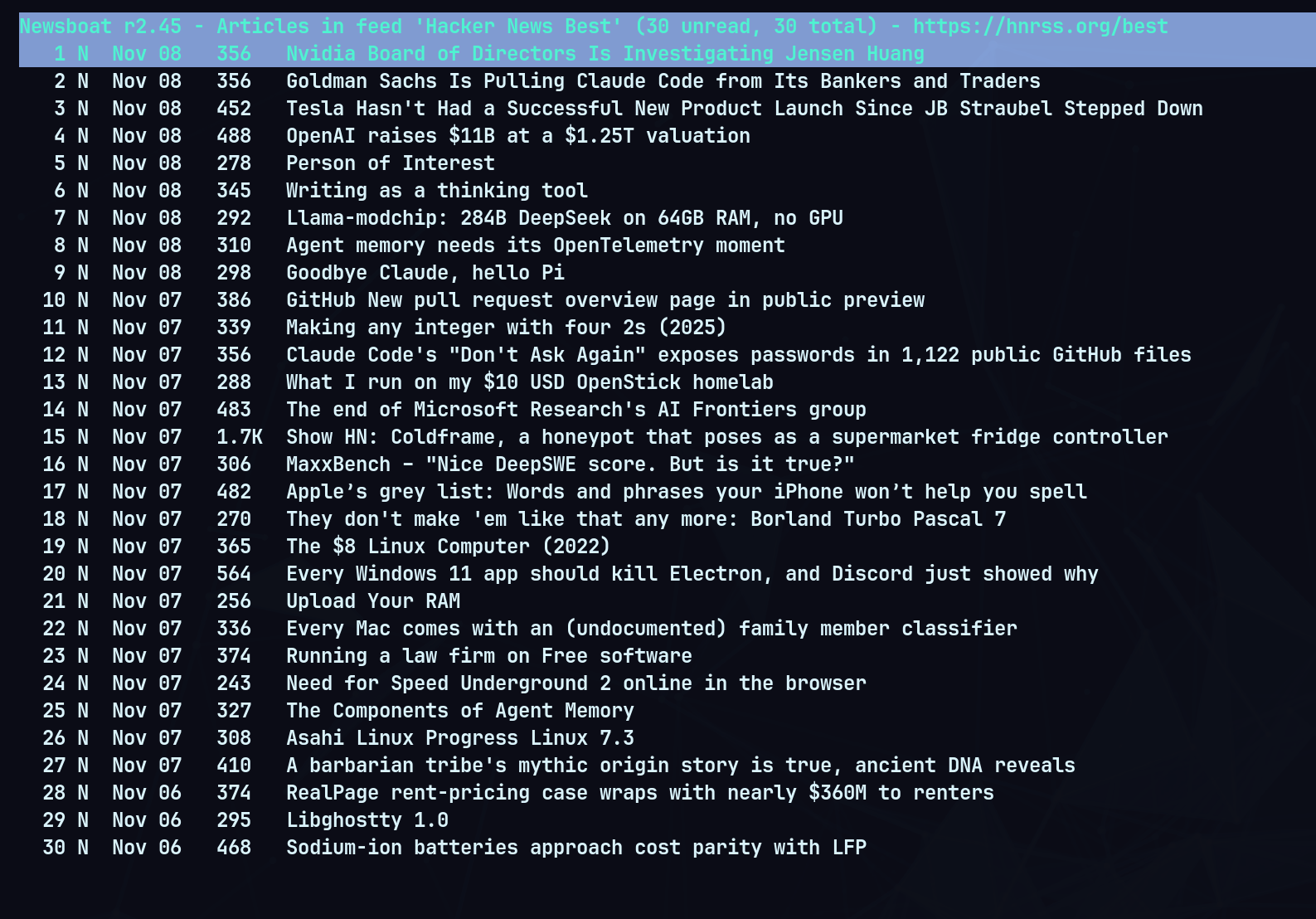
I use Newsboat in Omarchy as my primary RSS reader. There’s a lot published every day, and filtering it is one thing an algorithm does well. So I also get a daily RSS digest in Grok Bot. It filters how much I need to read, but I can tailor what gets included to my own preferences.
Owning a site and reading through RSS feel like two parts of the same idea: choosing where you publish and what you pay attention to.
Keeping the conversation
There is something social platforms do well that I missed when I started posting on my own site: feedback.
Publishing a post is one thing. Having people respond, ask questions or disagree with it is another. Without that, the site can feel like somewhere you put things rather than somewhere a conversation happens.
That was the original motivation for Add Comments. I wanted the ownership of publishing on my own site without losing audience engagement. It wasn’t about replacing everything a social network does. It was about creating a feedback loop in the place I was already writing.
Bring back the weird websites
My preference is to fully own the site and self-host it. That comes with responsibility, and I don’t think everyone needs to make exactly the same choices I do. The bigger question is: how dependent do you want to be on large companies?
The internet used to be full of people’s weird websites about whatever interested them. Social media took a lot of that away by giving everyone a ready-made place to post. Convenient, absolutely, but also much more uniform.
Even early social media let you make a page your own. Look back at some of the old MySpace pages from those days. Terribly embarrassing for the author in most cases, but a rich piece of internet history that you just don’t get on today’s social platforms.
Now AI has made creating a personal website much more accessible. It doesn’t have to look like everyone else’s profile. It can reflect your interests, your taste and the way you want to organise your thoughts.
That’s what excites me: not another way to fill a platform with content, but a chance to make more of the internet feel personal again.
There’s never been a better time to make a little corner of it yours.